
 Everyday growing
Free printable pack · Moving house
A New Front Door
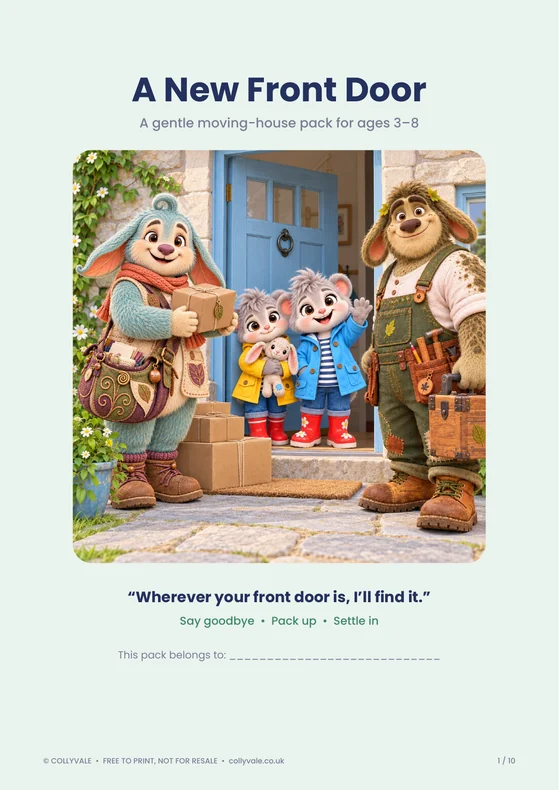
A gentle pack to help children through moving house: saying goodbye to the old home, packing up, and making a new place feel like home. Read about twins Wren and Robin arriving in Collyvale, and try the activities together.
Email me this packFree · Printable PDF · No book needed
What’s inside
Robin can’t wait to see the new house. Wren holds Bun the knitted rabbit very tight and wonders whether letters and friends will find them. Mr. Pottle makes a promise: “Wherever your front door is, I’ll find it.” These free printables help children say goodbye, look forward and settle in, at their own pace.
- A page for grown-ups with six simple ideas, including a note on brothers and sisters feeling differently about the same move.
- Mr. Pottle Finds the New Door, a short story with talk-together questions, and Goodbye and hello: things to remember and things to look forward to.
- A special box checklist, a moving countdown chain to color and a new room plan to draw.
- Two “I’ve moved!” postcards to send, an explore-my-new-place hunt, and a coloring page with a moving day memory box.
The pack is honest that change can feel strange. It shows that feeling excited and sad at the same time is normal, and that the important things come with us.
Get your free pack
Pop in your email and we'll send the download link straight to your inbox.
Who this pack is for
This pack is for children aged around 3 to 8 who are moving house, or have just moved, and for the grown-ups helping them. Even a happy move brings big changes for little ones. Saying goodbye, knowing what to expect and having small jobs to do can help a new place start to feel like home.
How to use it together
- Start a couple of weeks before. Read the story, then begin the countdown chain. Color one link each day.
- Say goodbye and hello. Draw a favorite place in the old home, then talk about three things to remember and three things to look forward to.
- Pack a special box together. Let your child choose what goes in it, and unpack it first at the new house.
- Explore the new place. Find a park, wave to a neighbor and spot the nearest mailbox. Send the “I’ve moved!” postcards to friends and family.
- Expect some wobbles. Clinginess or sleep changes are common before and after a move. Familiar routines help.
Questions grown-ups ask
What age is it for?
The suggested range is ages 3–8, with a grown-up alongside. Younger children can color, draw and tick while you do the writing; older children may like to write their own postcards and room plan.
Is it really free?
Yes. The 10-page printable pack is free. Joining A Little Letter from Collyvale is optional; you can leave its checkbox unticked and still request your pack.
We’ve already moved. Is it still useful?
Yes. The goodbye and hello page, the postcards, the room plan and the explore page all work well in the first weeks in a new home.
How do I get it?
Enter your email address in the form above. We’ll email you the download link so you can save the PDF and print the pages you want. Check your junk folder if it hasn’t arrived.
Can I print it more than once?
Yes, you can print extra copies for your own family, for example a set for each child, or more postcards to send.
Can I share it or use it at school?
Yes, please print it for your own family, classroom, preschool or group. If you’d like to share it, send people the link to this page rather than the PDF. The packs, stories and characters are © Brendan Martin, Collyvale. Please don’t sell them, or upload them to other websites, including in changed form.
Is this professional advice?
No. Collyvale is a storybook world, not professional advice. If your child’s worries about the move are intense or carry on for a long time, talk to their school or doctor.
Who makes Collyvale's packs?
Collyvale is made by Brendan Martin, a father and grandfather who wanted to help families through everyday wobbles. Read more about Collyvale.
You might also like
Everyday growing
 Everyday growing
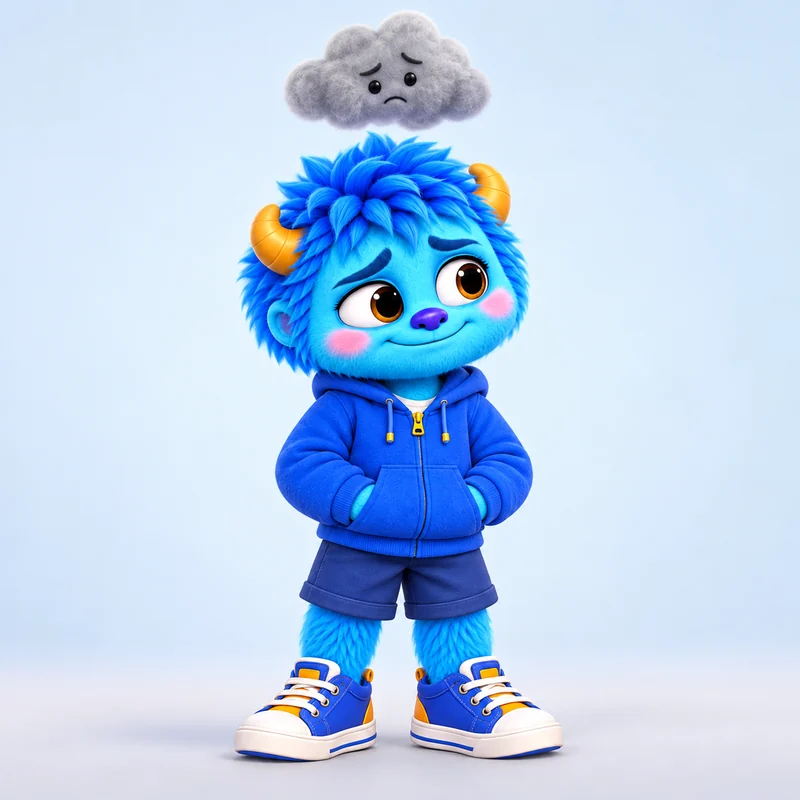
Ollie’s Worry Wobbles
Name a worry, share it and try one small brave step together.
Get this free packCollyvale provides general information, stories and family activities. It is not a medical or mental-health service and does not replace professional advice. If a child's worry is persistent, severe or interfering with everyday life, speak to their school, school nurse or doctor. If you're worried about your own wellbeing, please talk to your doctor. You can also find trusted information at healthychildren.org.